The Empire’s New Groove
New York ISO's first large scale offshore wind farm, Empire Wind, is expected to reach first power this year, yet the project looks to have fallen behind others in the pipeline.

The Northeast’s offshore wind ambitions have run into everything from blade failures to hostile federal action, yet steel is in the water and, increasingly, blades are spinning along the East Coast.
As this initial slate of projects nears the finish line, New York’s Empire Wind stands out. Its NYISO interconnection queue entry still lists a Commercial Operation Date (COD) of 9/1/2027, but satellite imagery tells a different story. Other projects, including some with later CODs, have begun installing turbines. With under a year to go, Empire has not.
We’re taking a look at where the project stands, and what a delay could mean for New York City’s grid.
Taking a Bight of the Big Apple
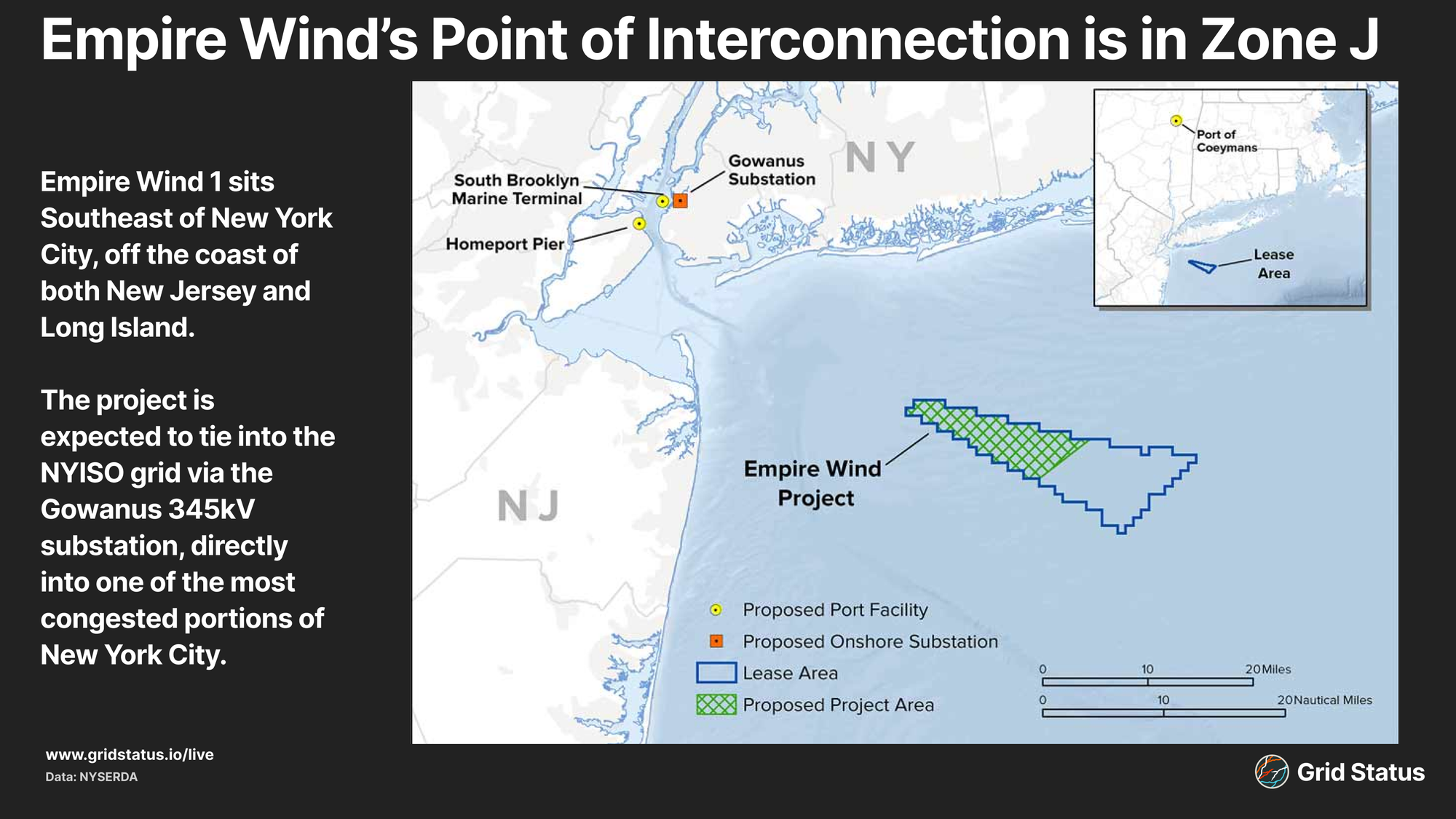
The 810 megawatt (MW) project in the New York Bight is being developed by Equinor. Equinor secured the lease area in 2017, but pre-construction work in New York started well before both federal permitting was complete and before power purchase agreements were signed in 2024. In 2021, Equinor selected Vestas as its turbine supplier and announced investments across the state to support the project.
That choice set Empire apart. Revolution Wind and Sunrise Wind went with Siemens Gamesa, as did Dominion for Coastal Virginia Offshore Wind. Vineyard Wind chose GE Vernova, but its components came from existing factories, and its selection of the novel supplier came with its own set of headaches.
The 2021 announcement also stated that “the tower sections for Empire Wind 1 and 2 are planned to be sourced from the Marmen/Welcon plant, which is being developed in Port of Albany.” Remaining components would be assembled at the South Brooklyn Marine Terminal, which required renovation for this project and any future offshore wind work.
The Port of Albany tower factory never got off the ground. The planned site sits on Beacon Island in the Hudson River in Bethlehem, just south of Albany. In 2022, redevelopment ran into trouble when the island was clear-cut without permits. By 2024, funding had dried up, and the tower supply contract expired.
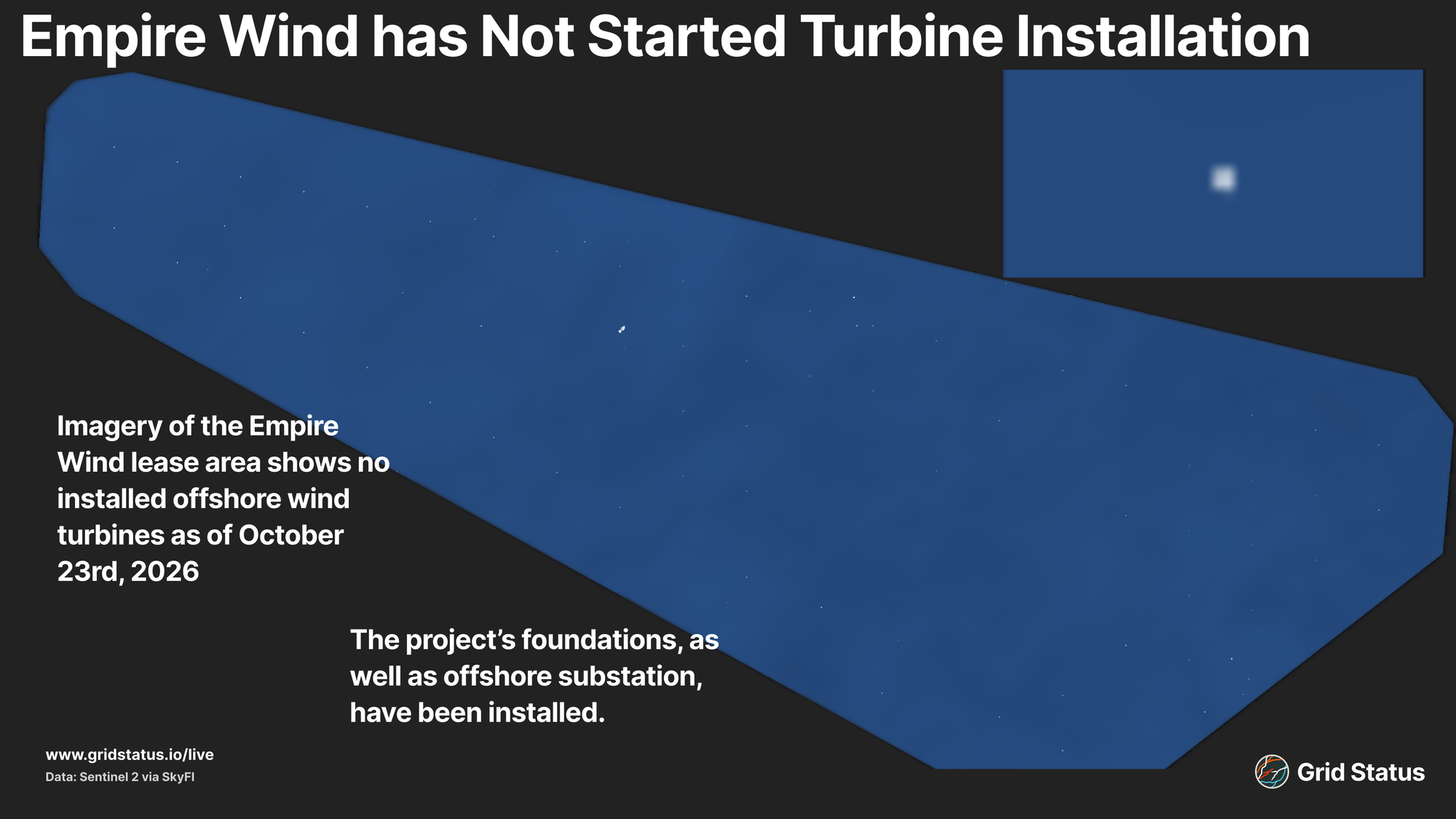
Following the completion of federal permitting in early 2024, construction began on both fronts. Foundation and cable work started offshore in 2025, alongside onshore work that included rehabilitating the South Brooklyn Marine Terminal. Foundation installation finished in 2026, as did the installation of the offshore substation, but the foundations have sat empty since.
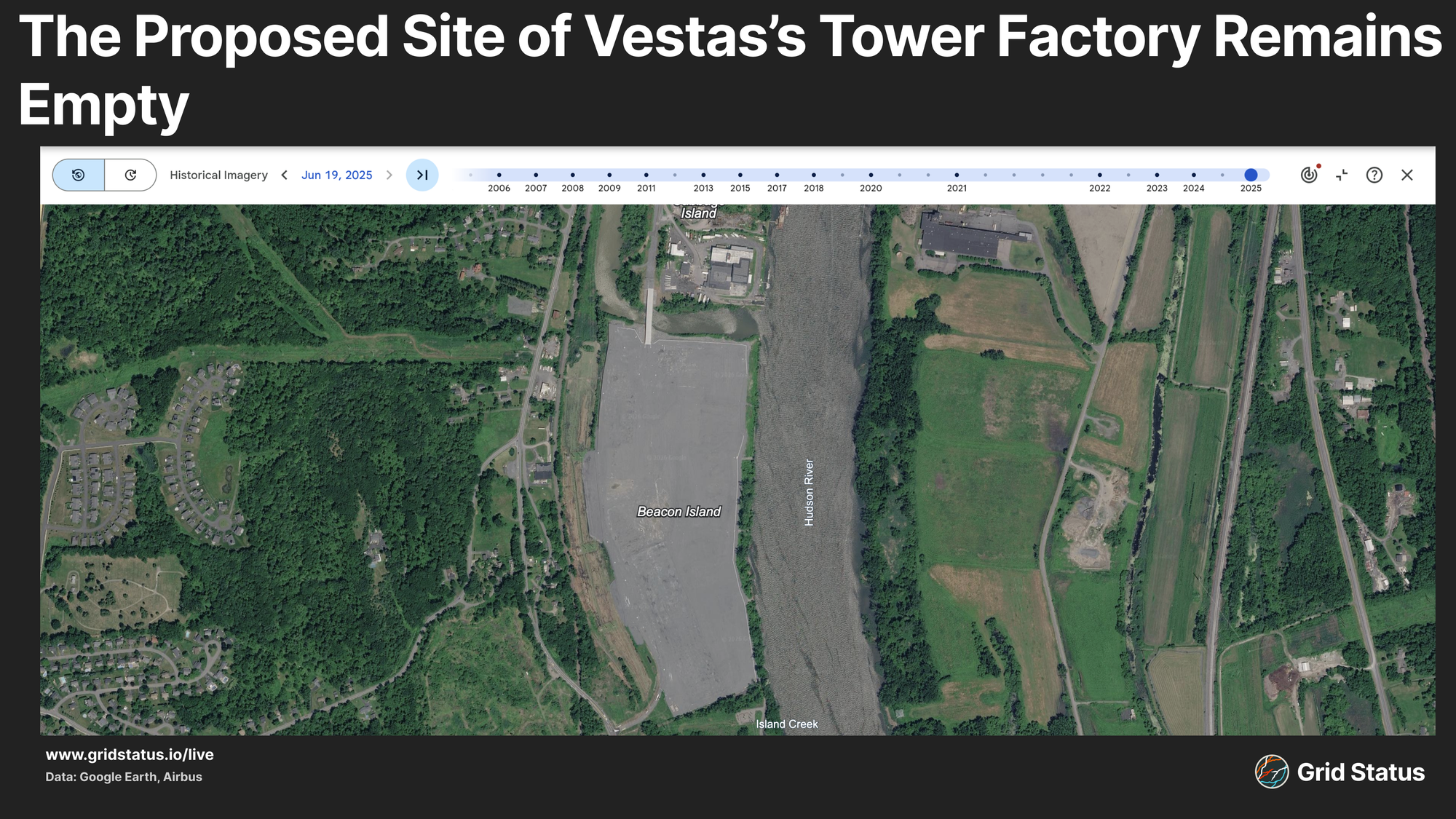
Despite over $170 million spent on the Beacon Island redevelopment to support the tower factory, the site remains empty, and the port is considering pivoting to attract new business, such as semiconductors.
The Notorious O.S.W
With the planned tower factory sitting idle, neither Equinor nor Vestas has said where Empire Wind’s towers will be built, pointing to potential delays.
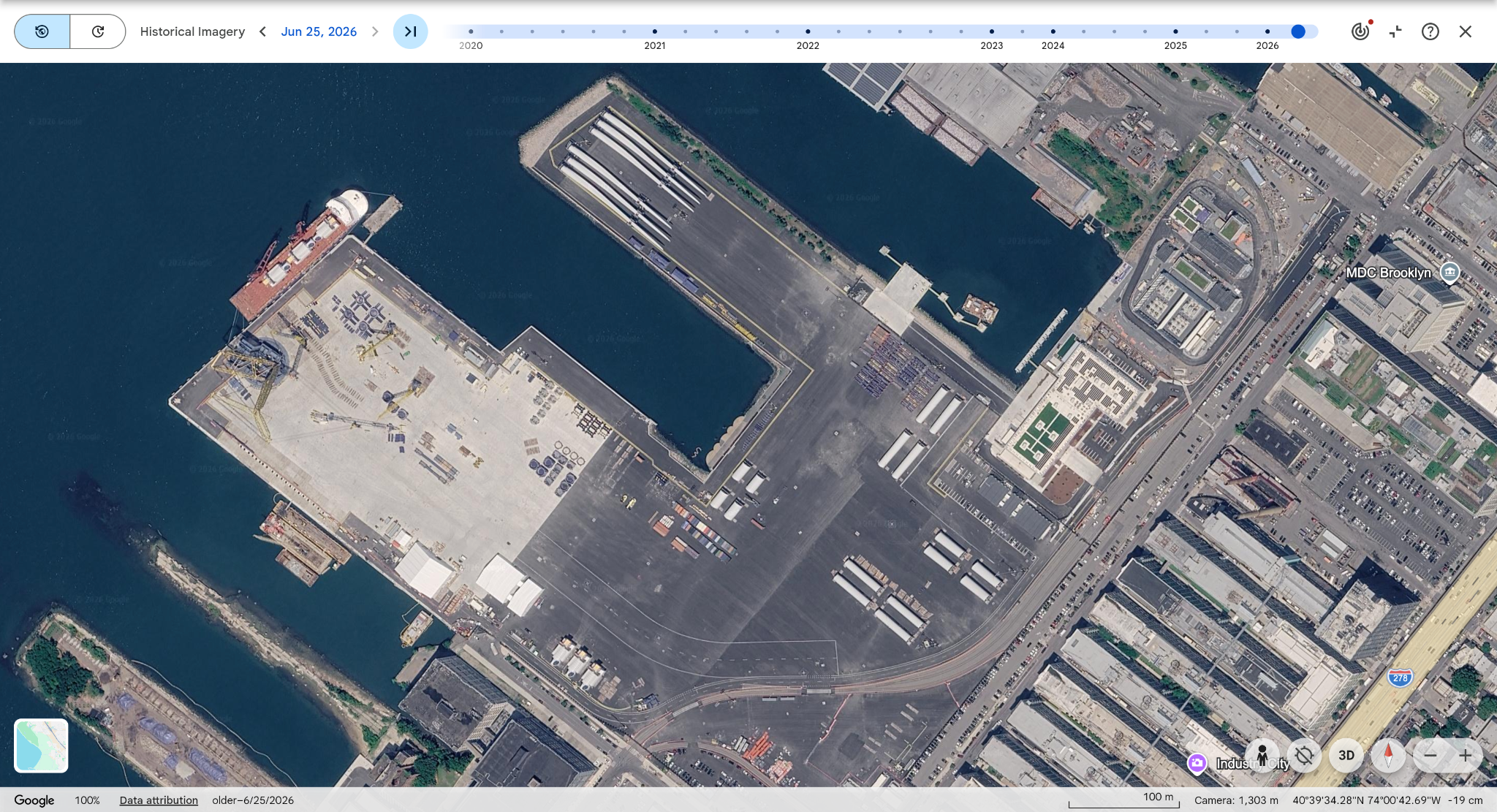
Google Earth imagery from late June 2026 shows turbine components laid out in Brooklyn, including 2 full sets of blades and nacelles, but completed towers are not visible.
An image taken on October 12th, 2026, by Vantor via Skyfi shows that activity has increased compared to this summer, but the South Brooklyn Marine Terminal has limited parts, with no new blades brought to the site since this summer.
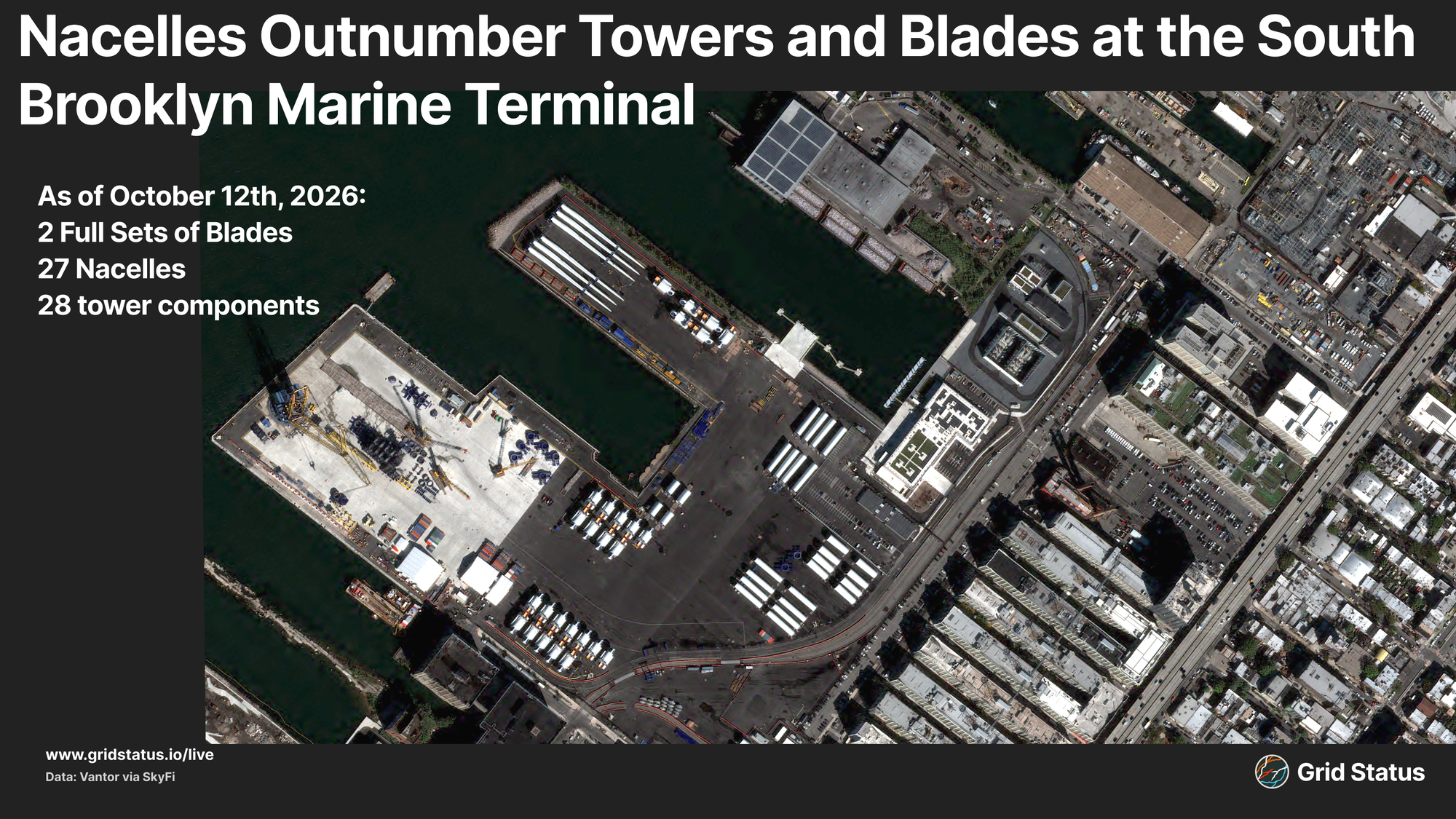
That points to a broader problem. With COD just a year out, turbine construction does not appear to have started, and with few towers, the remaining components can’t be installed. The project’s wind turbine installation vessel (WTIV) tells the same story.
To work around the constraints of the Jones Act, which complicates domestic shipping, including offshore wind installation, Equinor partnered with Maersk on a solution. The WTIV, Viridis, was completed in March 2026 and left Singapore to begin its first installation project at Empire. Public reporting placed it in Curaçao at the end of July, eventually making it to the Mississippi coast in late summer, where it has remained. A Sentinel-2 image from 9/28 clearly shows the Viridis there, consistent with vessel tracking data that has placed it in the Gulf since August.
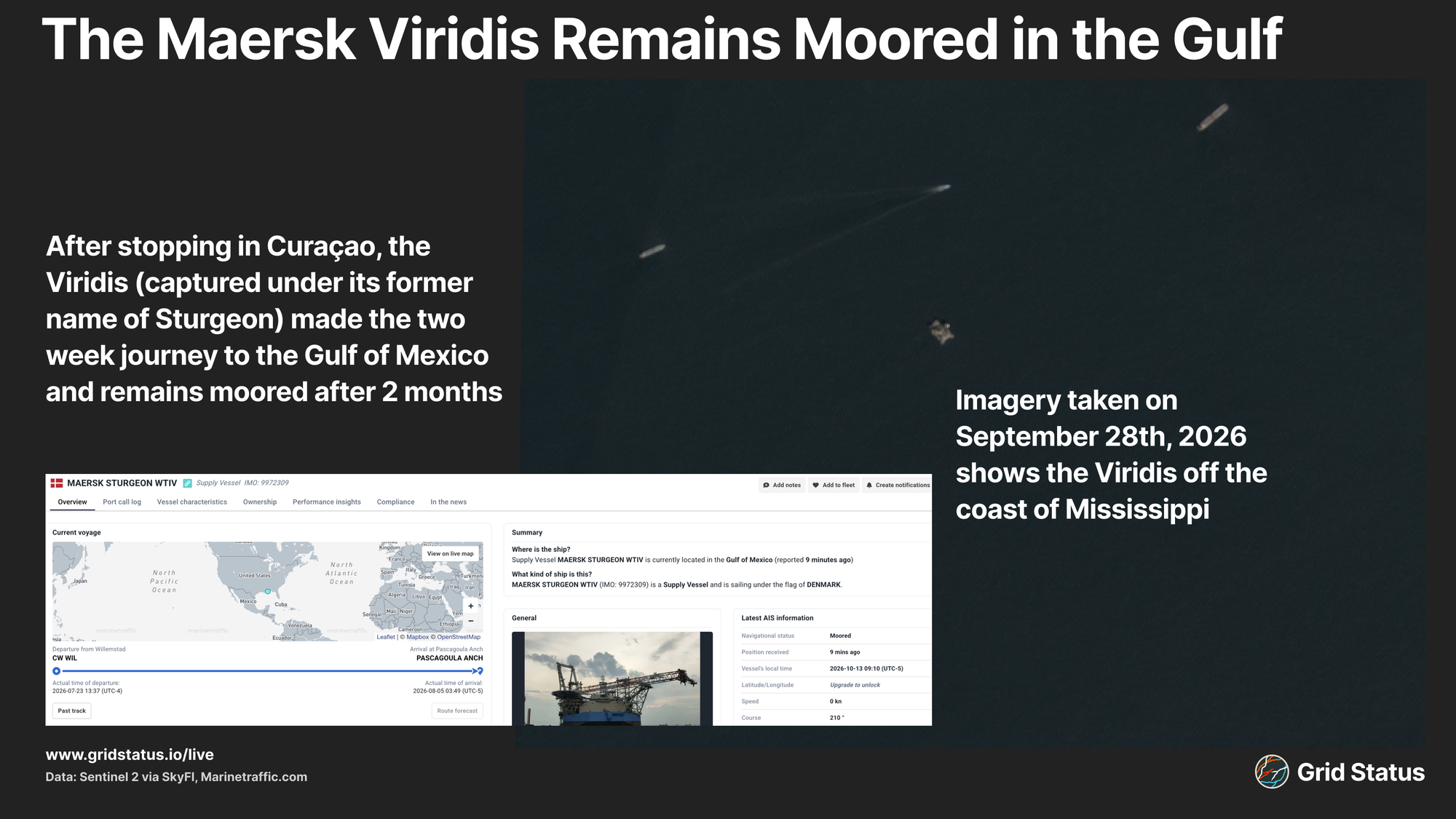
This combination of evidence seems to point to the turbine towers as a potential source of the bottleneck, with limited tower deliveries slowing a push to begin installation compared to nearby projects.
NYISO’s other active Offshore Wind Project, Sunrise Wind, is being spearheaded by Ørsted off the coast of Block Island.
The 924 MW project, which has a COD of Oct 1, 2027, after Empire’s, is already well on its way to finishing construction, with turbine installation already underway.
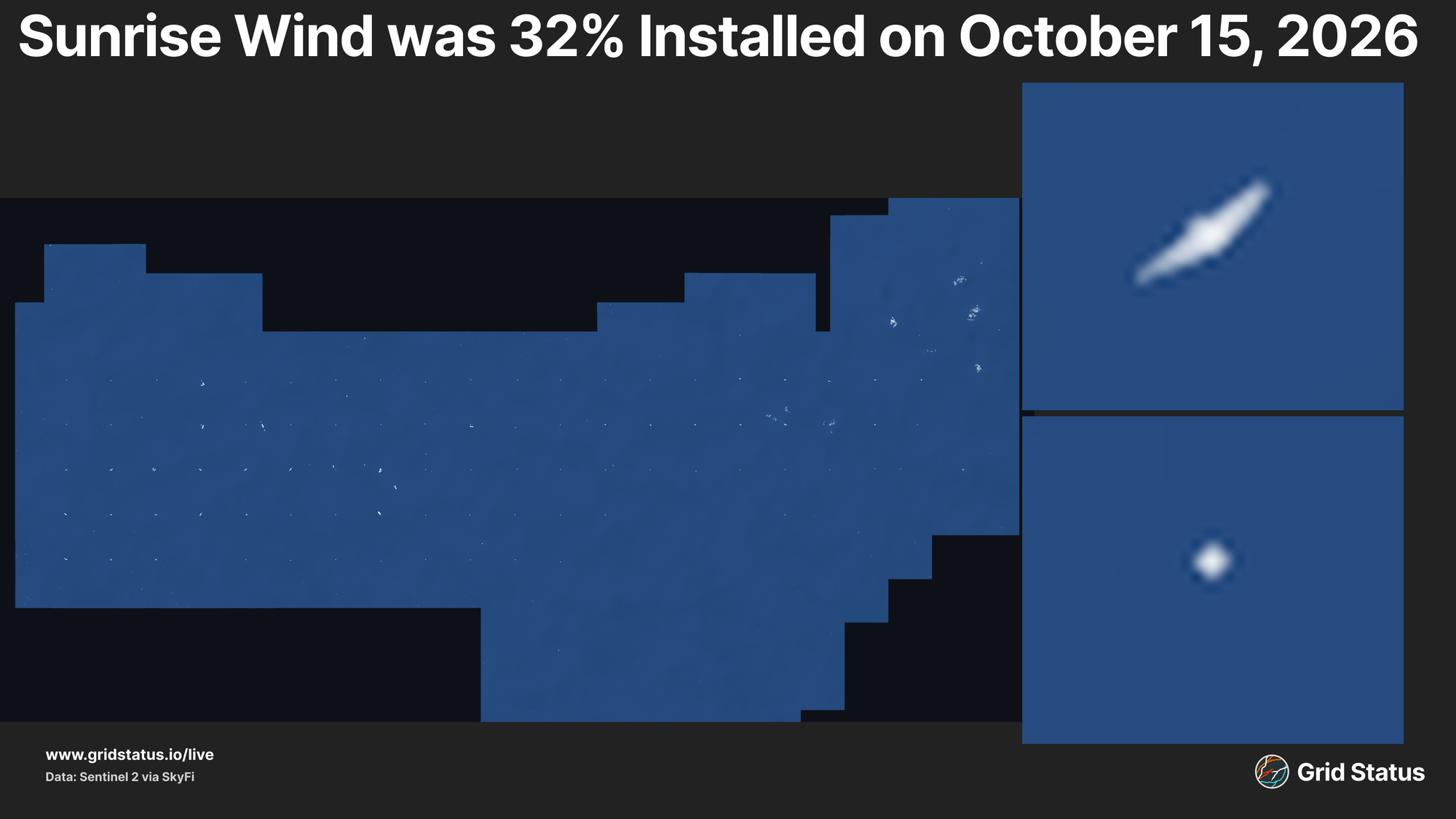
Based on an image of the lease area captured on October 15th, 2026, Sunrise already had at least 27 turbines installed. Ørsted is using the same WTIV as it did for its nearby Revolution Wind project, the WIND SCYLLA, which remains in the lease area, continuing to install turbines as it has since April 2026.
Based on the estimated 27 turbines installed at Sunrise, the project has close to 300 megawatts (MW) of its planned nameplate capacity installed and potentially commissioned, ahead of its planned Q4 2026 first power. Sunrise Wind’s point of interconnection is also downstate, but like NYISO’s only other existing offshore wind farm, South Fork, Sunrise will tie into Long Island (Zone K).
As late as October 2025, Empire Wind had maintained expectations of first power by Q4 of 2026, but with no installed turbines and without the Viridis, this target may be in jeopardy.
The slow start to installation at Empire Wind poses upside risks to New York City (Zone J), particularly during the winter months.
In the Sea, Turbines Glistening
Unlike other planned offshore wind developments, Empire is uniquely positioned to deliver power into the heart of a major city.
One of the main benefits of offshore wind development is the ability to place turbines off the coast of major coastal load centers and bring that power directly where it is needed. This reduces the need for new transmission to tie in often far-away renewables.
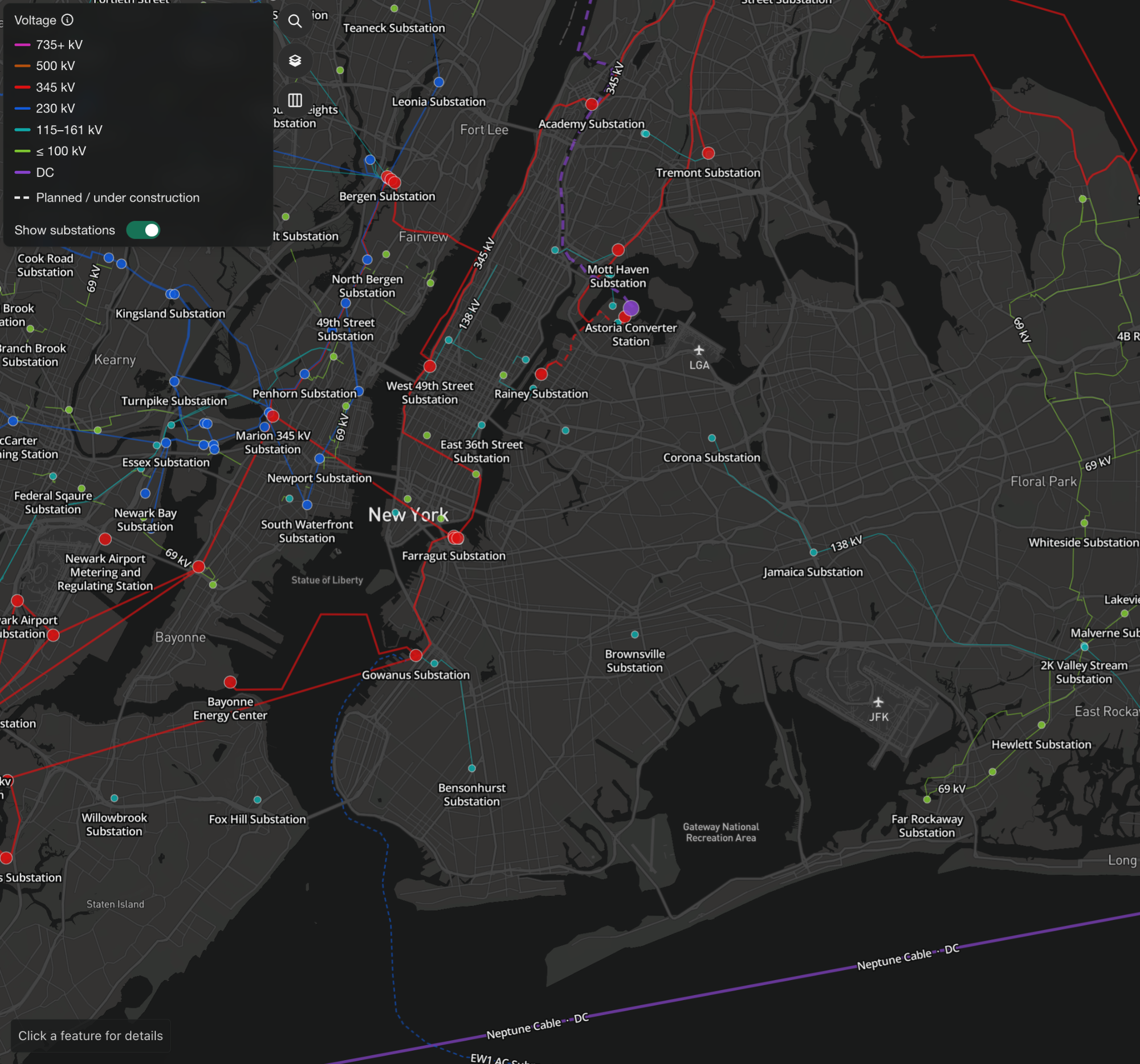
In this case, Empire Wind selected the Gowanus 345kV substation as its point of interconnection, putting its injection point directly into the 5 boroughs, NYISO’s largest demand center.
Notably, taking a look at the node’s pricing since 1999, January has seen the highest average day-ahead LMPs, mainly from high marginal energy prices due largely to natural gas volatility.
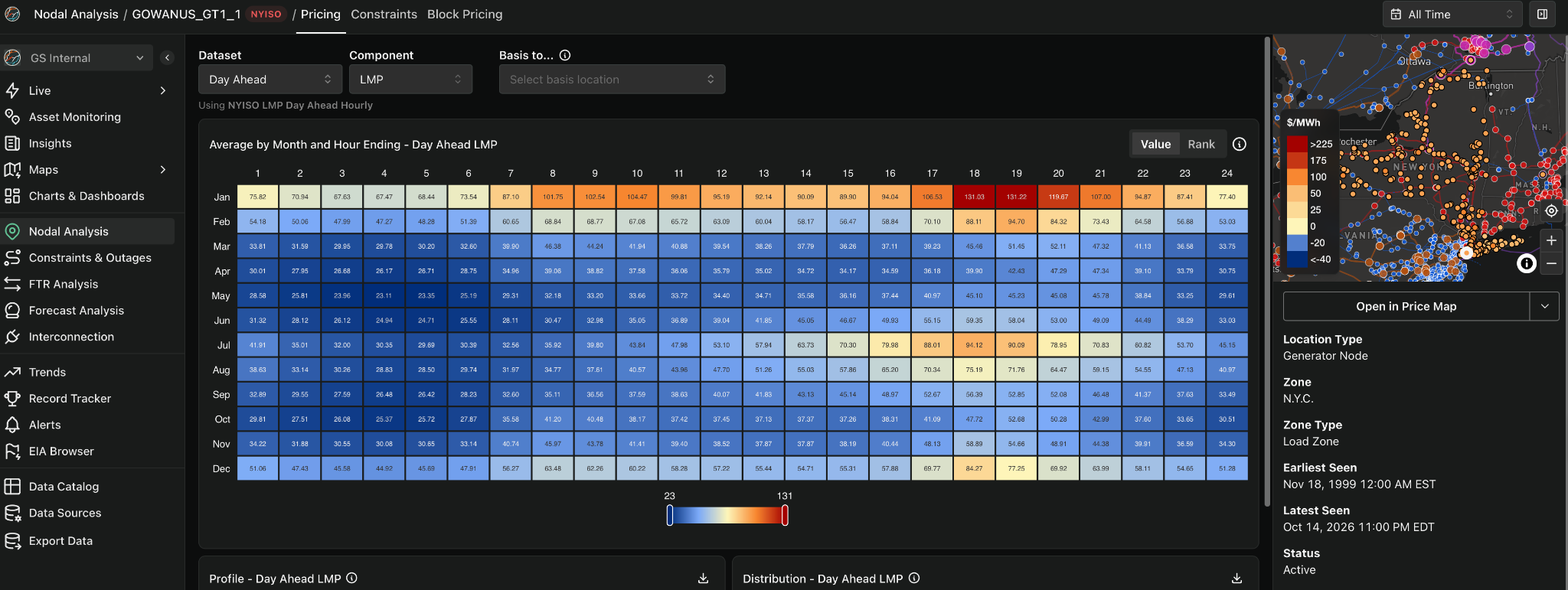
During the winter, a combination of high residential demand and limited pipeline capacity spikes spot natural gas prices, increasing energy prices and often leading to oil generation being the marginal unit.
Modeling done by Charles River Associates for NYSERDA noted that offshore wind generation tends to be strongest during the winter months, when output from solar is weak and when NYISO tends to experience the highest risk of gas supply interruptions.
We can even see this in operational data from South Fork, NYISO’s only active, and much smaller, offshore wind farm.
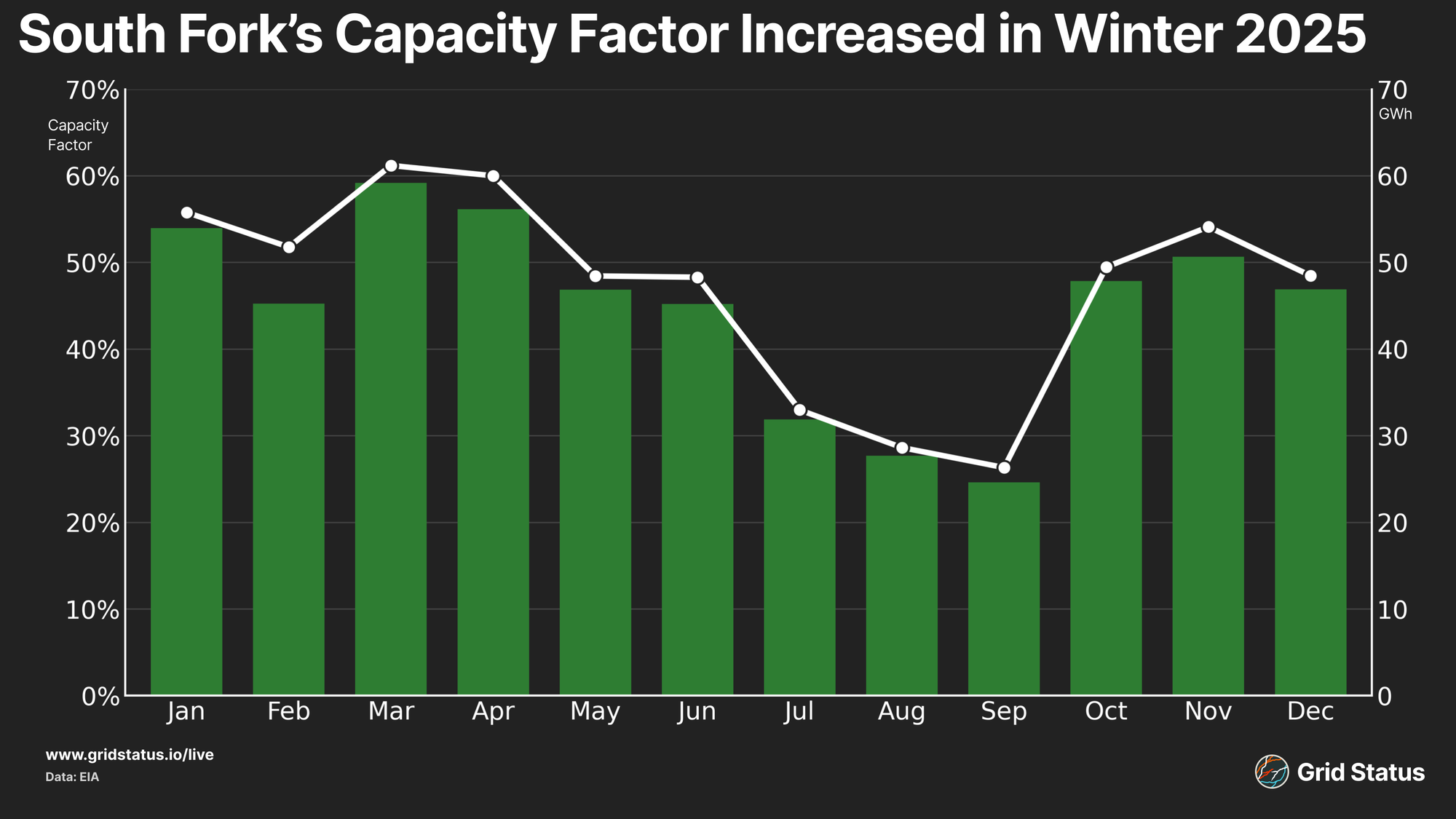
In 2025, South Fork saw capacity factors at or near 50%, around 20% higher than those seen during the summer.
The delays in bringing Empire online reduce potential winter supply in a region of the state that desperately needs it, keeping pressure on existing, aging dual-fuel and oil units.
Investment in NYISO has largely been centered around Zones J and K due to tightening reliability margins, though some of this was a self-inflicted wound driven by the retirement of Indian Point. The 2 gigawatt (GW) nuclear plant, located due north of New York City in Zone H, fully exited the stack in 2021.
Recreate Him in the Aggregate
In order to account for the loss of capacity from Indian Point, projects like Empire Wind, Sunrise Wind, the Champlain Hudson Power Express (CHPE), and Propel NY have focused investment downstate to both increase generation and transmission capacity in the New York City Area.
Investments have been split between new offshore wind generation, which between Empire and Sunrise amounts to over 1700 MW of capacity, albeit at a much lower capacity factor than Indian Point, and increased transmission. CHPE has a rated capacity of 1250 MW that flows directly into Zone J, but flows have been far from consistent, and Propel NY would hope to unlock around 2 GW of increased transmission capacity between Long Island and the rest of the state.
On paper, the combination of transmission and renewable energy helps to offset the drop in baseload generation from Indian Point, but since most of this is made up of non-dispatchable generation, it's not a one-for-one comparison.
Leveraging actual capacity factors from South Fork from 2025, we can see the share of downstate load that the planned offshore wind projects would have provided.
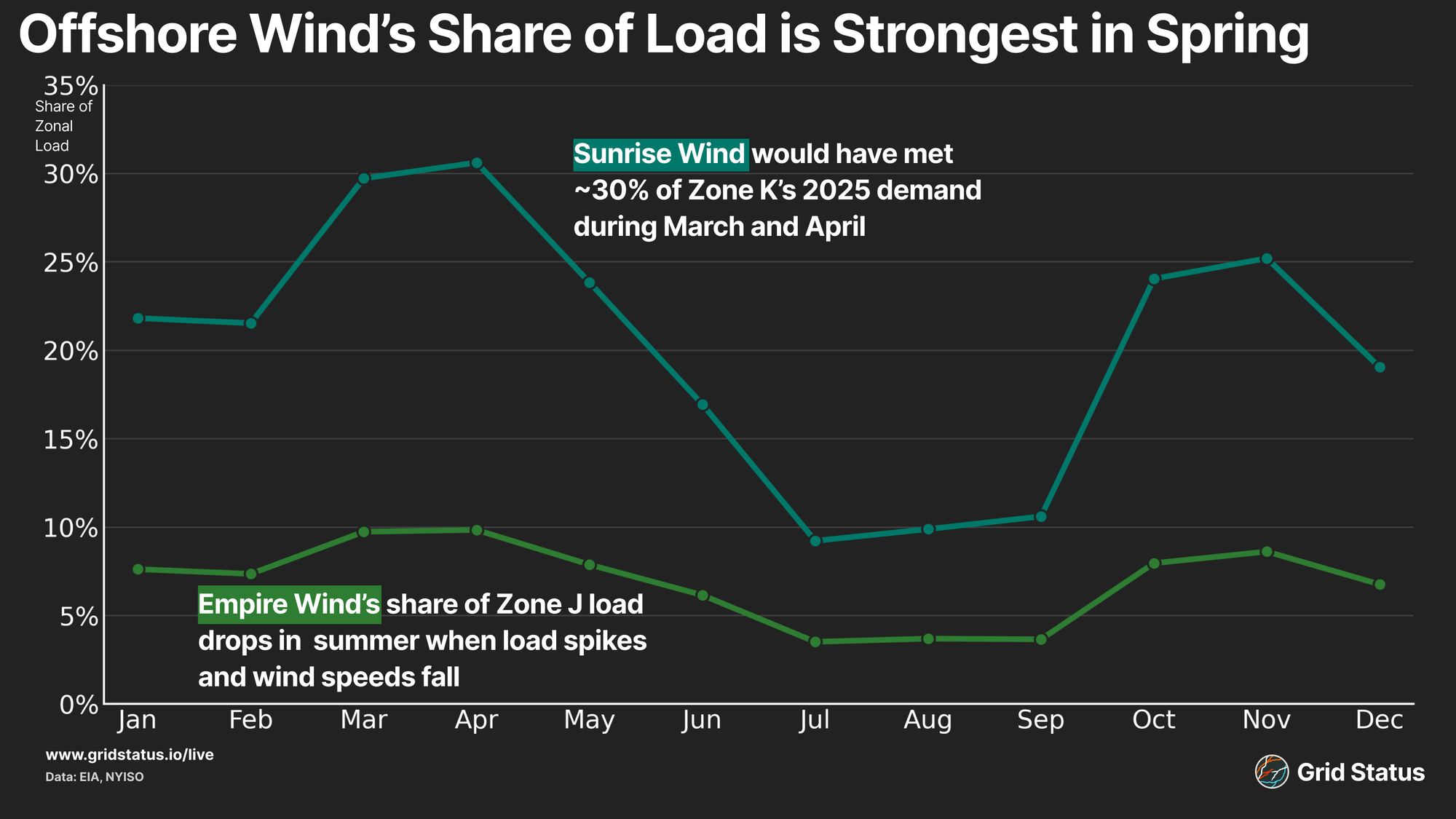
Contributions from Sunrise and Empire are elevated in the shoulder season when stronger wind speeds coincide with weaker system demand. Notably, this is also when thermal generators tend to go on maintenance outages, which can add pressure to the system.
Generation levels drop in the summer, but Sunrise would still make up ~10% of Long Island’s demand even as both wind speeds drop and demand increases. Both projects would see generation levels pick up in the winter, which has become an increasingly delicate time in the Northeast.
Neighboring regions, like Hydro-Québec and PJM, have seen tight conditions in recent winters, limiting transfer capabilities. Tightness on the gas supply network impacts both neighboring PJM and ISO-NE, while electric heating demand drives tight conditions in Hydro-Québec, which, as NYISO has noted, is expected to limit CHPE’s availability.
Empire Strikes Back
Ahead of another potential tight winter in the Northeast, New York and New England’s nascent offshore wind developments are in vastly different stages.
While Empire waits to kick off construction, New England’s 806 MW Vineyard Wind and 704 MW Revolution Wind are expected to be fully operational. Sunrise Wind’s progress, compared with Empire Wind’s stagnation, raises questions about which project will bring needed capacity online first ahead of the winter.
We’ll be tracking project developments ahead of the winter and looking for the impact of new capacity in the ever-tightening winter conditions of the Northeast this year.